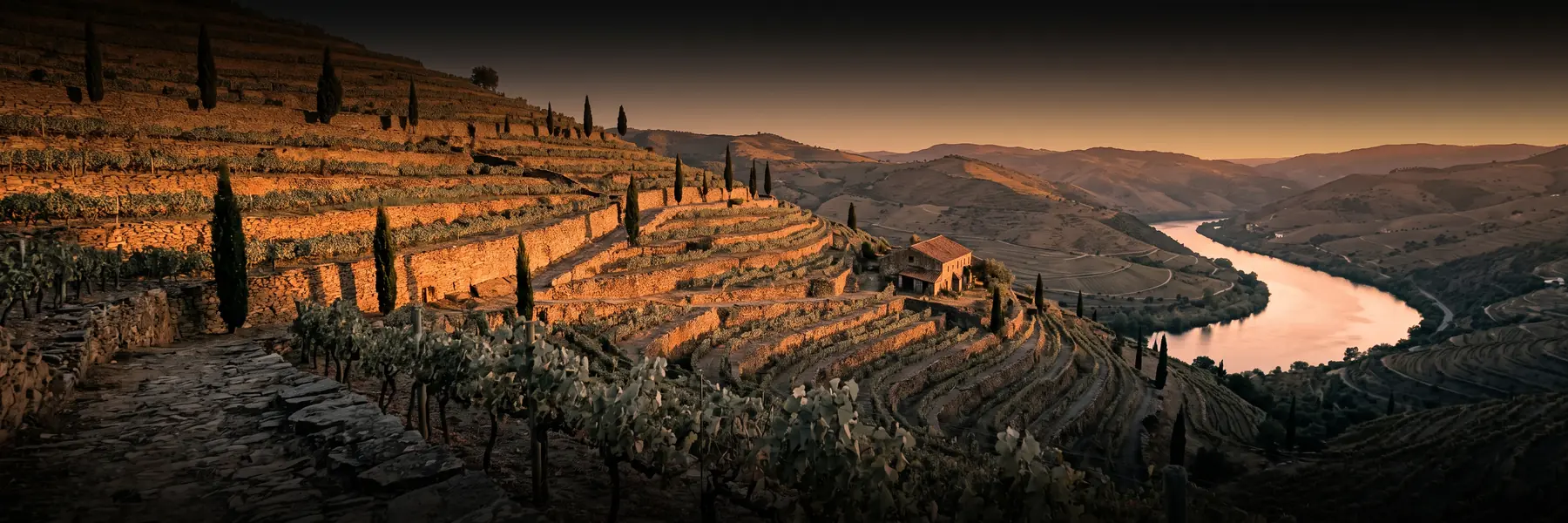
Armenia — Areni, Clay Karas, and the Oldest Winery Ever Found
Armenia — Areni, Clay Karas, and the Oldest Winery Ever Found
In a cave near the village of Areni, in the mountains of southern Armenia, archaeologists uncovered a clay treading floor, a drainage channel, vats, drinking vessels and thousands of grape seeds. The site — Areni-1 — dates to roughly six thousand years ago, and it is the earliest known winemaking facility anywhere: not just evidence that people drank wine, but the physical apparatus for producing it at scale.
Armenia therefore has the strongest possible claim to deep winemaking history, and one of the weakest recent records. For most of the twentieth century the country's grapes went to brandy, not wine, and a genuine fine-wine industry has existed for barely two decades. It is one of the most interesting places in wine right now precisely because so little is settled.
The Brandy Detour
Under the Soviet system, wine production across the USSR was allocated by republic, and Armenia's assignment was brandy. Yerevan's brandy industry became famous, plantings were oriented toward high-yielding varieties suited to distillation, and winemaking as a craft largely lapsed.
The consequence is that Armenia's modern wine revival had to start almost from scratch — new plantings of the right varieties, new equipment, and a generation of winemakers trained abroad or self-taught. It also means a lot of very old vine material survived in remote villages, untouched, because nobody had a commercial reason to pull it out.
Where the Wine Comes From
Ararat Valley is the broad, hot, irrigated plain around Yerevan, in the shadow of Mount Ararat. It is the country's agricultural heartland and historically the source of brandy and table grapes; modern estates here make ripe, generous reds and whites.
Vayots Dzor, to the south — the region containing the Areni cave — is the centre of serious Armenian wine. Vineyards climb steep, rocky slopes at high altitude in a dry, sharply continental climate, on volcanic and limestone-derived soils. The wines are fresher, finer and more mineral than those of the valley floor.
Aragatsotn, Vayk and the area around Lake Sevan contribute further high-altitude sites, some among the highest commercially farmed vineyards anywhere.
The Grapes
Areni (Areni Noir) is Armenia's great red. It gives a pale-to-medium ruby wine with red cherry, pomegranate, dried herbs and spice, high acidity, moderate tannin and a savoury, mineral finish. In weight and structure it sits closer to Nebbiolo or Pinot Noir than to any warm-climate red — which surprises people expecting something rustic.
Voskehat ("golden pip") is the leading indigenous white: textured, with quince, citrus peel, herbs and nutty depth, and it takes skin contact and clay ageing well.
Khatoun Kharji, Sireni, Tozot and other village varieties survive in small quantities and are being investigated by the newer producers. Kangun and Haghtanak are twentieth-century crossings, widely planted, mostly workhorses.
Karas
Armenian tradition ferments and ages wine in karas — large clay vessels, buried or partly buried, in the same broad family as Georgian qvevri and Iberian tinajas. Several modern producers have returned to them, and Zorah's Karasì is the wine that made the practice internationally visible.
Clay does three things that stainless steel does not: it exchanges a small amount of oxygen through the walls, it moderates temperature by mass and by contact with the earth, and it adds no flavour of its own. If you are curious about clay, the practical points are:
- Vessels must be scrupulously clean; porous clay harbours spoilage organisms and is much harder to sanitise than steel
- Many are lined with beeswax, which changes the oxygen exchange substantially
- Volumes are fixed and awkward, and a cracked karas is unrepairable
Our vessel types guide compares clay with wood, steel and concrete.
Producers
Zorah (Zorik Gharibian) in Vayots Dzor, whose Karasì brought Areni to international attention; Trinity Canyon Vineyards; Yacoubian-Hobbs, a collaboration with the Californian winemaker Paul Hobbs; Keush, making traditional-method sparkling wine from very high vineyards; Karas in the Ararat Valley and Van Ardi in Aragatsotn; Voskevaz; Old Bridge.
Making Wine From a High-Altitude, High-Acid Red
Areni is a useful model for a whole class of grapes: pale, aromatic, high-acid, moderate-tannin reds grown at altitude. If you work with Pinot Noir, Nebbiolo, Blaufränkisch or a local equivalent, the same principles apply.
Picking
- Do not chase colour. A pale variety will not become dark by hanging longer — it will only lose its acid and perfume.
- Target roughly 23–24.5 °Bx with pH 3.3–3.5 and TA 6–7.5 g/L. High-altitude fruit usually arrives with acid intact.
- Pick on aroma. If the fruit smells of cherry and spice, it is ready; if it smells of jam, you are late.
Extraction
- Cold soak 2–4 days: anthocyanins extract in the aqueous phase, so this is where pale varieties gain what colour they can without tannin.
- Ferment 24–28 °C with gentle punch-downs. Thin-skinned reds give up harsh seed tannin readily under heavy cap work.
- Press at or just after dryness. Extended maceration flatters thick-skinned varieties, not these.
Élevage
- MLF is standard and helps soften a high-acid wine. At low pH it can be sluggish — hold SO₂ until it finishes and keep the wine at 18–20 °C. See MLF explained.
- Oak with restraint: 10–25% new, or neutral wood, or clay. These wines are about aromatic detail.
- Low pH is an advantage for stability: SO₂ is far more effective, so you need less of it. See understanding SO₂ and the SO₂ calculator.
Food Pairing
Areni: lamb khorovats, grilled trout, herb-heavy dishes, dolma, aged sheep's cheese. Voskehat: walnuts, matsun and herb dishes, grilled vegetables, lavash and cheese.
Tip: Pale, high-acid reds are the most commonly mishandled wines in small cellars, because the instinct is to try to make them darker and bigger. Every intervention that adds colour and extraction subtracts perfume. Work out what the grape actually is, then make that wine as well as you can — the market for a distinctive, honest medium-bodied red is far better than the market for an imitation of something else.