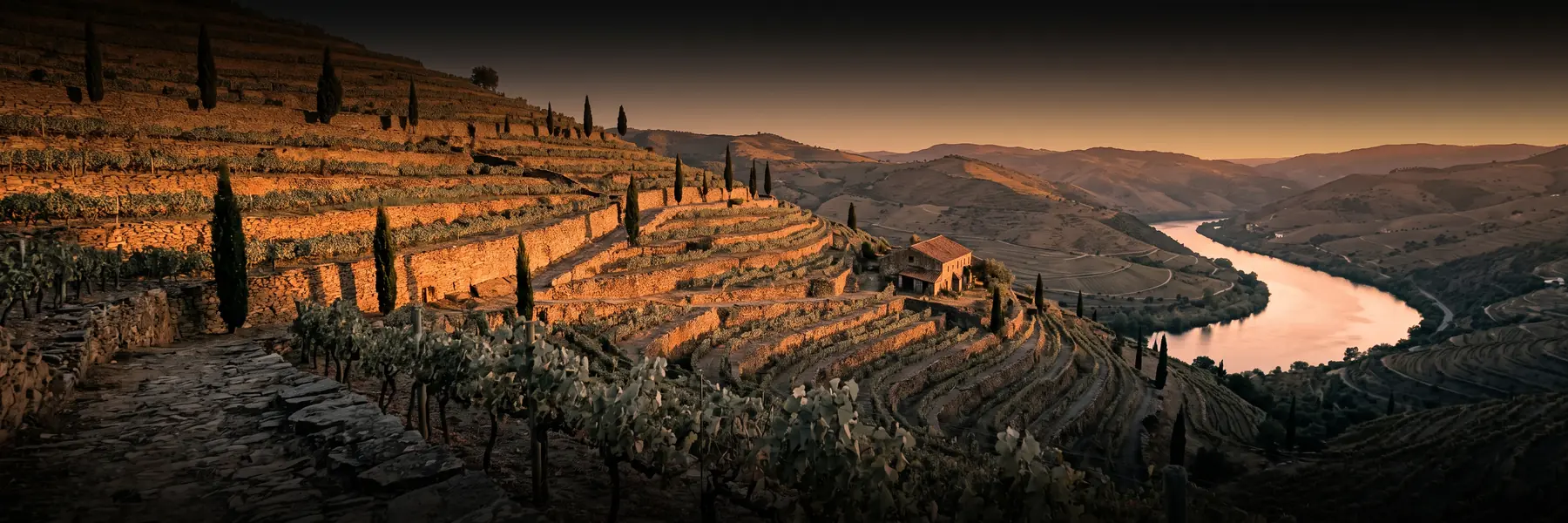
Alto Maipo — Andean Cabernet and Chile's Finest Reds
Alto Maipo — Andean Cabernet and Chile's Finest Reds
Chile's most expensive and most internationally admired red wines come from a narrow band of stony ground in the Andean foothills immediately south-east of Santiago. Alto Maipo — "upper Maipo" — is where Cabernet Sauvignon behaves the way it does in the best parts of the Médoc: structured, cedary, precise, and capable of decades in bottle rather than years.
It is also where you can see Chile's two great viticultural advantages most clearly: a dry Mediterranean climate with almost no disease pressure, and vineyards that have never been through phylloxera.
Geography
The vineyards climb the Andean foothills roughly between 600 and 900m, on alluvial terraces laid down by the Maipo river. The soils are stony to a fault — river-rolled cobbles and gravel over sand and clay, free-draining and low in fertility. The Puente Alto and Pirque areas are the most famous; Alto Jahuel is a further significant zone.
Two consequences:
- Low vigour and small berries. Poor stony soils produce modest crops of concentrated fruit without any intervention.
- Excellent drainage. In a region where all water is supplied by irrigation, drainage plus controlled irrigation means the grower dictates vine water status precisely.
Climate
Mediterranean, with hot, entirely dry summers, and — crucially — cold air descending from the Andes at night. That mountain influence gives Alto Maipo a wide diurnal range at a relatively warm mean temperature, which is the combination that produces ripe fruit with retained acid and firm tannin.
Rainfall is confined to winter. Fungal disease is a minor concern, which is why so much Chilean viticulture is effectively organic in practice, and why Chile has a genuine advantage in low-intervention farming.
Ungrafted Vines
Phylloxera never established in Chile. The country's geographic isolation — desert to the north, Andes to the east, ocean to the west, ice to the south — kept it out, and a large proportion of Chilean vineyard is planted on its own roots rather than on grafted rootstock.
Whether ungrafted vines make better wine is genuinely debated and not settled; what is not in doubt is that Chile has an unusual reservoir of old, own-rooted vine material, and that its nurseries did not have to rebuild their genetics after the phylloxera catastrophe that reshaped European viticulture.
The Carménère Story
For most of the twentieth century Chile believed it was growing a great deal of Merlot. In the 1990s ampelographic and DNA work established that much of it was in fact Carménère, a Bordeaux variety that had all but disappeared from France after phylloxera. Chile turned out to be its last real home.
Carménère matters here for a practical reason: it ripens much later than Merlot (four to five weeks) and later than Cabernet (two to three weeks), and picked too early it is aggressively herbaceous — green pepper, tomato leaf and hard tannin. Alto Maipo's Cabernet plantings sometimes include field-interplanted Carménère, and a wine picked on Cabernet's schedule with Carménère in the mix will taste green through no fault of the winemaking.
The lesson generalises: know what is actually in your block. Mixed plantings ripen at different rates, and the pick date that suits one variety ruins another.
The Wines
Alto Maipo Cabernet Sauvignon: cassis and black cherry, cedar, graphite, tobacco leaf and a distinctive dried-herb or eucalypt note, with firm, fine-grained tannin and real length. It is more restrained and more structured than Napa Cabernet and generally fresher than Bordeaux at the same price.
Producers: Almaviva (Concha y Toro with Baron Philippe de Rothschild), Don Melchor (Concha y Toro's Puente Alto flagship), Viñedo Chadwick, Santa Rita's Casa Real, Cousiño-Macul, Antiyal, Haras de Pirque.
Making Alto Maipo-Style Cabernet
Harvest
- 24.5–26.5 °Bx, pH 3.5–3.7, TA 5.5–6.5 g/L is a workable target for this structured style.
- Chew the seeds. Cabernet with green seeds gives hard, drying tannin whatever you do afterwards. Our harvest timing guide covers sampling properly.
- Pick blocks and varieties separately, even from the same vineyard.
Fermentation
- 26–30 °C. Two pump-overs a day at peak, easing off as the wine approaches dryness — late extraction is where harsh seed tannin enters.
- 12–20 days on skins; extended maceration up to a month at the top end, but only on genuinely fine-tannin fruit.
- MLF standard; see MLF explained.
- Acidify pre-ferment if pH exceeds about 3.7, using the acid adjustment calculator.
Oak
French oak, 40–70% new for a flagship wine, 18–22 months. Alto Maipo's fruit has the structure to carry serious oak, but the wines that age best show cedar and graphite rather than vanilla and toast.
Blending
Small proportions of Cabernet Franc, Petit Verdot, Merlot or Carménère are traditional and useful — Carménère in particular adds a plush mid-palate that Cabernet lacks. Blend at assemblage by tasting, not by recipe; see blending theory.
Food Pairing
Alto Maipo Cabernet: grilled beef, lamb with rosemary, pastel de choclo, aged Manchego, dark chocolate. Carménère: braised beef, chorizo, roasted peppers, smoked paprika dishes.
Tip: If your Cabernet consistently shows green pepper at what should be full ripeness, before blaming the vintage check three things: what is actually planted in the block, how shaded the fruit zone is, and how heavily cropped the vines are. Pyrazines degrade with light exposure and ripeness — a canopy that never lets the sun near the bunches will give you green wine in a hot year.