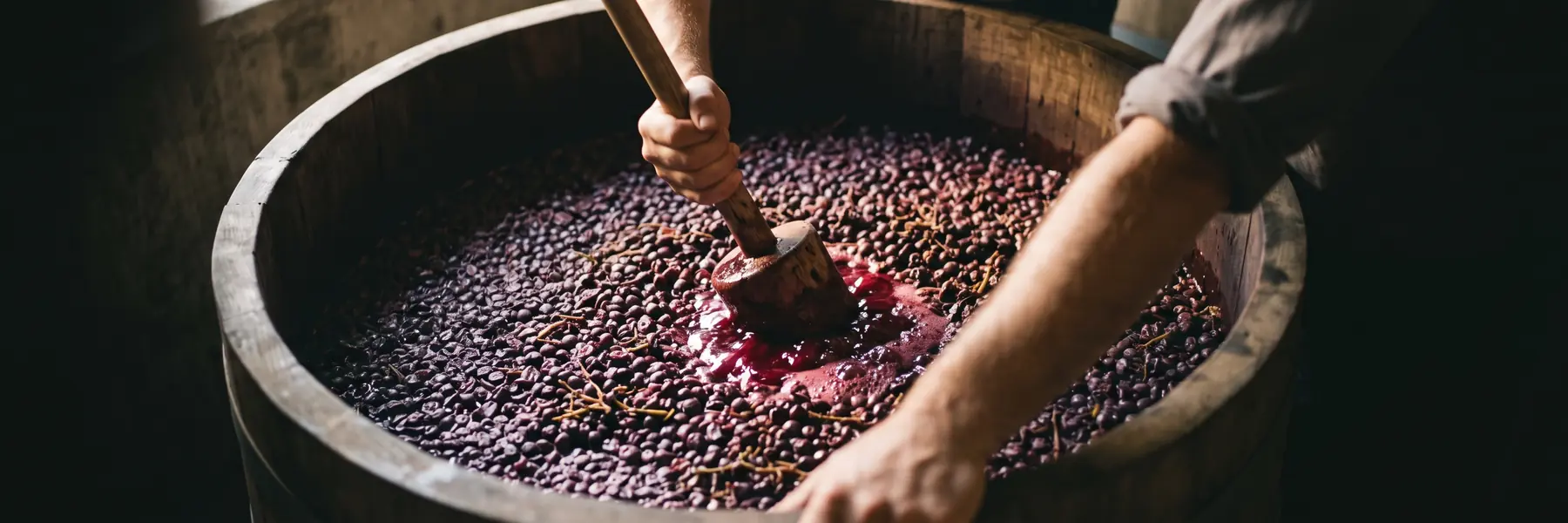
Natural Fermentation vs Commercial Yeast — Pros and Cons
Natural Fermentation vs Commercial Yeast — Pros and Cons
The debate between spontaneous (natural) and inoculated (commercial yeast) fermentation is one of the most charged in winemaking today. The reality is more nuanced than either camp admits. Both approaches can produce exceptional wines; both have legitimate risks and benefits.
What Is Spontaneous Fermentation?
Also called wild fermentation or pied de cuve when intentionally managed, spontaneous fermentation relies on yeasts naturally present on the grape skins, in the winery environment, and on equipment, rather than a deliberately added commercial yeast strain.
The "wild yeast" population on grapes is complex:
- Apiculate yeasts (Hanseniaspora, anamorph Kloeckera) predominate initially
- Metschnikowia, Pichia, Candida, and other non-Saccharomyces species contribute in early fermentation
- Saccharomyces cerevisiae takes over as alcohol rises above 3–4% (most non-Saccharomyces are alcohol-sensitive)
The result is a sequential fermentation by multiple yeast species before the main S. cerevisiae strain dominates.
What Commercial Yeast Provides
Commercial (inoculated) yeast is a selected, highly studied strain of Saccharomyces cerevisiae:
- Predictability: You know what you're pitching. The strain's behaviour, flavour profile, alcohol tolerance, and nutrient requirements are documented.
- Dominance: A large dose of commercial yeast (250–350 mg/L, or ≈2.5g per 10L) quickly outcompetes wild flora.
- Reliability: Fermentation starts within 24 hours and proceeds without unexpected pauses.
- Specificity: You can choose a strain that emphasises particular characteristics (ester production, malic acid reduction, aromatic release).
Arguments for Spontaneous Fermentation
Complexity and terroir expression
Wild fermentation produces wines with more complex, layered aromatics because multiple yeast species each contribute different metabolites. Many natural wine proponents argue that spontaneous fermentation produces wines with stronger sense of place — terroir — because the yeast population reflects the local environment.
Fewer additions
In true natural winemaking philosophy, spontaneous fermentation is part of a broader commitment to minimal intervention. No commercial yeast means one fewer additive.
Interesting non-Saccharomyces contributions
Some non-Saccharomyces species produce compounds that commercial Saccharomyces doesn't:
- Torulaspora delbrueckii (Biodiva) contributes fruity complexity
- Starmerella bacillaris produces higher glycerol levels (roundness); Metschnikowia contributes aroma-releasing enzymes
- Lachancea thermotolerans produces lactic acid (natural acidity without acid additions)
These strains are now available commercially, allowing winemakers to get non-Saccharomyces effects in a more controlled way.
Arguments Against Spontaneous Fermentation
Unpredictability and risk
The local wild yeast population varies year to year, vineyard to vineyard. A spontaneous ferment in a new winery with no established yeast flora in the equipment and building is a genuine gamble. Common risks:
- Stuck fermentation: wild yeasts are alcohol-sensitive and may die before completing fermentation, leaving residual sugar and creating an environment for spoilage bacteria
- Brett (Brettanomyces) contamination: produces barnyard, medicinal, sweaty aromas — prized by some, unacceptable to others
- High volatile acidity: wild populations are more likely to overproduce acetic acid
- Off-flavours: mousiness, geranium, sauerkraut from unusual microbial populations
Slower fermentation start
Wild populations take longer to establish. This lag phase (sometimes 3–7 days before active fermentation) is high-risk — the must is warm, exposed, and full of nutrients.
Difficult to replicate
If you make an exceptional spontaneous wine, repeating it the following year with the same population is impossible. Commercial yeast allows for year-on-year consistency.
Middle Ground Options
Pied de cuve (natural starter culture)
Harvest a small amount of grapes 1–2 weeks early, allow them to begin fermenting naturally. Once active, add this starter to the main must. You get wild fermentation with reduced lag-phase risk.
Commercial non-Saccharomyces strains
Products like Lallemand's Lachancea, Scott's Biodiva (Torulaspora), or Chr. Hansen's Viniflora give controlled access to non-Saccharomyces characteristics.
Low-SO₂ and wild-friendly practices
Some winemakers use commercial Saccharomyces but add minimal SO₂, allowing surviving wild flora to contribute during the early ferment before the commercial strain dominates.
Which Should You Choose?
| Situation | Recommendation |
|---|---|
| First batch / learning | Commercial yeast — reliability is the priority |
| Established winery with healthy yeast population | Spontaneous fermentation is viable |
| Clean, modern winery / home cellar | Commercial yeast — wild flora may be limited anyway |
| Premium terroir-focused wine | Consider spontaneous or pied de cuve |
| High-sugar, high-risk must | Commercial yeast — too much to lose |
| Experimental batch | Spontaneous — and accept the risk |
Note: The best spontaneous wines come from vineyards with rich, diverse yeast populations — typically older vineyards, farmed organically, in established wine regions. A home winery with no track record of spontaneous fermentation may produce very different (and less reliable) results from the same approach.