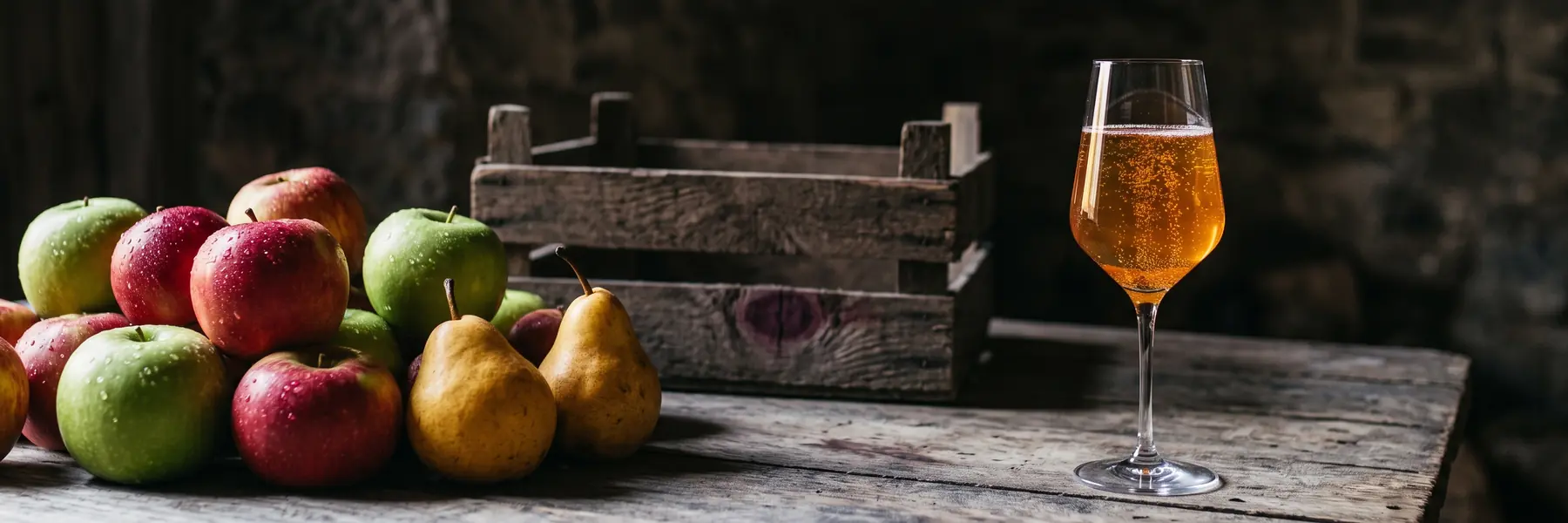
Keeving: The French Method for Naturally Sweet Cider
Keeving: The French Method for Naturally Sweet Cider
Keeving is one of the most intriguing traditional cider-making techniques — a method that uses the apple's own pectin chemistry to starve the yeast of nitrogen, producing a naturally slow fermentation that stops with residual sweetness, without any chemical intervention. The result is a naturally sweet, gently sparkling, low-alcohol cider (typically 3–5% ABV) that has been made in Brittany and Normandy for centuries.
The Science of Keeving
Pectin methylesterase (PME) — the key enzyme
Fresh apple juice contains pectin — a complex polysaccharide in the cell walls. The enzyme pectin methylesterase (PME), also present in apple juice, de-esterifies pectin, producing pectin acid (polygalacturonic acid) and methanol.
Pectin acid is insoluble and quickly binds with calcium ions naturally present in the juice to form calcium pectate — a gelatinous, insoluble mass.
The chapeau brun (brown cap)
This calcium pectate gel floats to the surface of the juice, binding with it large amounts of the juice's natural protein and nitrogen compounds — including the amino acids that yeast need to ferment vigorously.
As it rises, this gel forms a dense brown cap on the surface of the juice (the chapeau brun in French). Below the cap, the juice is now severely depleted of Yeast Assimilable Nitrogen (YAN).
Nutrient-starved fermentation
When yeast are pitched into this nitrogen-poor environment, they cannot ferment vigorously. The fermentation proceeds extremely slowly, may stop altogether partway through, and the resulting cider retains significant natural sweetness.
No stabilisation is required — the yeast simply couldn't access enough nutrition to ferment all the sugar.
Conditions Required for Successful Keeving
Keeving is notoriously unreliable. Several conditions must align:
-
High-pectin apples: Bittersweet cider apple varieties with high natural pectin. Dessert apples often don't have sufficient pectin to form a strong chapeau.
-
Low-temperature pressing: Cold juice (around 5°C) holds back the yeast, giving the PME enzyme time to work on the pectin and the gel time to form and rise before fermentation stirs everything up. Press and keep cool.
-
Low nitrogen in the juice: Modern, intensively managed orchards may produce high-nitrogen juice that resists keeving. Old varieties, unirrigated orchards, and traditional orchard management produce lower-nitrogen juice.
-
Calcium addition (optional): Some producers add a small amount of calcium chloride (0.2–0.4g/L) to supplement the calcium needed for calcium pectate formation. Speeds chapeau formation.
-
No added nutrients: Never add YAN nutrients to a must intended for keeving. You're trying to starve the yeast, not feed them.
-
Little or no SO₂ at pressing: use none, or at most a quarter to half the normal pH-based dose — heavy sulphiting suppresses the slow wild fermentation whose gentle CO₂ lifts the chapeau brun.
The Process
1. Press and fill vessel
Press apples cold. Fill vessel to nearly full. Do not add SO₂ or nutrients.
2. Allow chapeau to form
At 5–10°C, allow the juice to sit undisturbed. Over several days to a week, a distinct brown cap forms on the surface. In ideal conditions it rises quickly; in difficult years it barely forms.
3. Rack below the chapeau
Once the chapeau is clearly established, rack (siphon) the clear juice from below it into a clean vessel, leaving the chapeau and fine lees behind. This is the "keeve" — you've removed the nitrogen-depleted juice cleanly from the cap.
4. Cool fermentation
Do not pitch cultured yeast — it is far too vigorous and will ferment straight through the nutrient limitation; let the wild microflora work. Ferment slowly at 5–10°C. The fermentation should proceed slowly for weeks or months.
5. Bottle when residual sugar is right
When gravity has dropped to your target (commonly ~1.015 for a sweet cider, ~1.010 for off-dry — bottling much above this risks over-carbonation even in nutrient-poor cider), bottle and allow natural bottle conditioning for gentle carbonation.
What Can Go Wrong
Chapeau doesn't form: Low-pectin apples, high nitrogen in the juice, or too warm. Not every year or every variety works.
Over-fermentation: If ambient nitrogen is too high despite keeving, the yeast may ferment fully anyway, producing a dry cider. Add less yeast or use no yeast (trust wild fermentation) for better results in high-nitrogen musts.
Bottle refermentation: Hard to control sweetness precisely. Monitor gravity carefully before bottling. Use heavy pressure-rated sparkling-wine bottles (e.g. from Champagne or cava) to handle potential over-carbonation safely.
Traditional vs Modern Keeving
Traditional keeving relies entirely on the natural PME and apple pectin. Modern producers sometimes:
- Add commercially purified pectin methylesterase to guarantee chapeau formation
- Use clarifying enzymes selectively to improve the process reliability
- Keeving as a blend with fully fermented dry cider to target a specific FG
These approaches produce more consistent results but move away from the entirely natural process.
Tip: Keeving is worth attempting as an experiment even if it fails — observing whether a chapeau forms, and how quickly, tells you a great deal about the natural chemistry of your apples. Log everything.