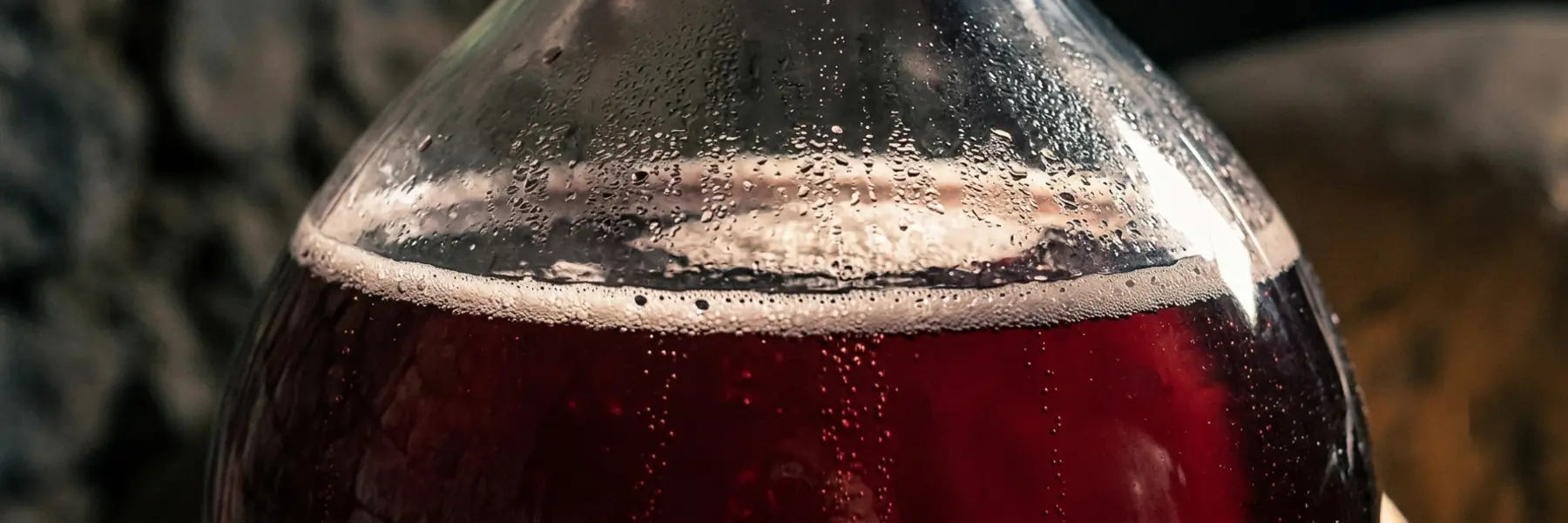
Fermentation Phases
Wine goes through several distinct phases from grapes to bottle. Understanding each phase helps you make the right decisions at the right time.
1. Primary Fermentation
Yeast converts sugar to alcohol and CO₂. Vigorous bubbling, cap formation in red wines, rapid gravity drop. Typically lasts 5–14 days. Temperature control is critical here for flavour development.
2. Malolactic Fermentation (MLF)
Lactic acid bacteria convert sharp malic acid into softer lactic acid. Reduces acidity, adds complexity and a creamy, buttery character. Desirable in most reds; often avoided in crisp whites. Can be spontaneous or initiated with a commercial MLF starter.
3. Ageing / Maturation
Wine rests on fine lees or in oak to develop complexity. MLF lees contribute autolytic character. Oak contributes vanilla, spice, and tannin. Duration: weeks to years depending on style.
4. Fining
Agents are added to remove unwanted compounds — tannins, proteins, colour compounds, off-flavours. Wine must rest again after fining before racking.
5. Bottling
The final phase. SO₂ levels are adjusted for bottle stability, wine is filtered (if desired), and bottles are filled, corked, and labelled with a lot number.