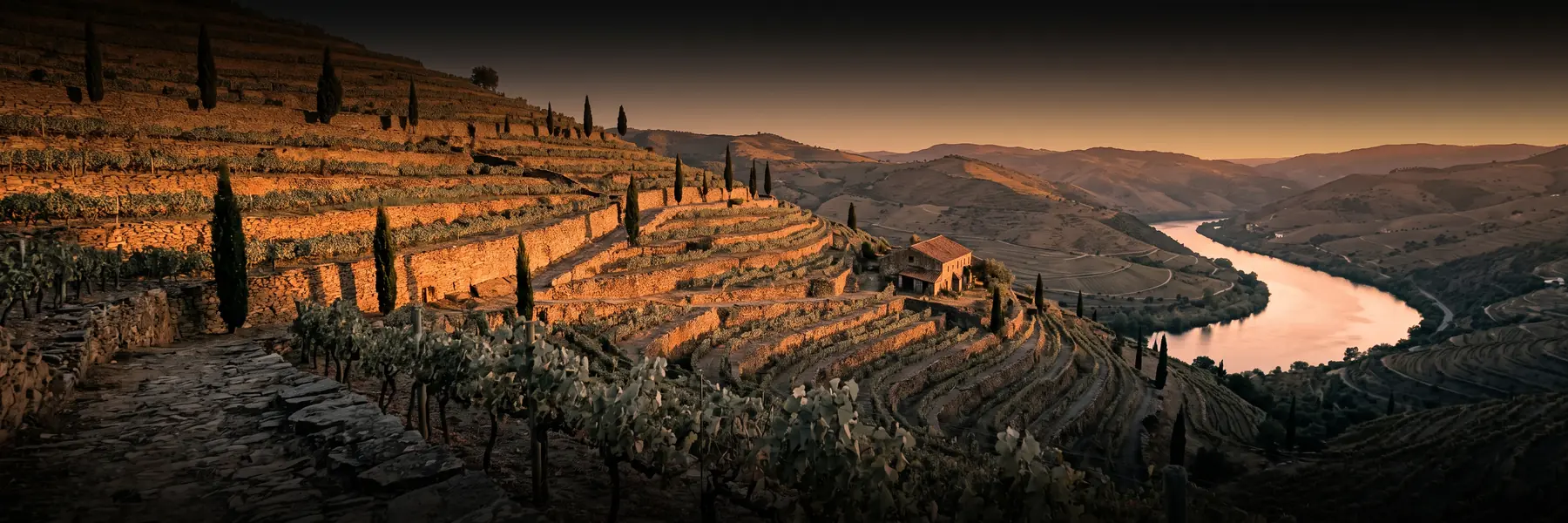
Austria — Grüner Veltliner, Riesling, and the Wachau
Austria — Grüner Veltliner, Riesling, and the Wachau
Austria produces some of Europe's most distinctive and underrated wines. The country's signature white grape — Grüner Veltliner — offers a style found nowhere else: dry, peppery, mineral, and remarkably food-friendly. Combined with the dramatic Danube-cut terraces of the Wachau and increasingly acclaimed red wines from Burgenland, Austria punches far above its size.
Geography
Austria's wine regions cluster in the east and northeast:
- Wachau — the most famous; Danube Valley between Melk and Krems; terraced granite and gneiss slopes; dramatic, scenic; dry Riesling and Grüner Veltliner of the highest quality
- Kamptal — Kamp River valley north of Krems; loess and primary rock; excellent dry whites
- Kremstal — around Krems; diverse soils including loess; good quality whites
- Wagram — northwest of Vienna; famous for old-vine Grüner Veltliner from deep loess soils
- Vienna (Wien) — the only capital city with significant commercial wine production; Gemischter Satz (field blend) is its unique tradition
- Burgenland — east; warm; Blaufränkisch heartland; also noble sweet wines from Neusiedlersee
Climate
Continental, moderated by the Danube River in the west and the Neusiedlersee (a large shallow lake) in the east. The Pannonian Plain's warm air masses and the Alpine cool mountain air create unique conditions. Significant diurnal temperature variation preserves acidity and aromatic precision.
Key Grapes
White
| Grape | Character |
|---|---|
| Grüner Veltliner (GrüVe) | Austria's signature; white pepper, green herbs, citrus, grapefruit; dry; versatile |
| Riesling | Exceptional in Wachau and Kamptal; more mineral and structured than German Riesling |
| Welschriesling | Unrelated to Rhine Riesling; lighter style; also used for sweet Beerenauslese |
| Weißburgunder (Pinot Blanc) | Fresh, neutral; good for everyday wines |
| Chardonnay | Called Morillon in Styria; rich, full-bodied |
Red
| Grape | Character |
|---|---|
| Blaufränkisch | Austria's finest red; dark cherry, spice, firm tannins; mineral and structured |
| Zweigelt | Most planted Austrian red; lighter, cherry, easy-drinking |
| Sankt Laurent | Silky, red cherry; Pinot Noir-adjacent; underrated |
| Pinot Noir (Spätburgunder) | Increasing quality in cooler sites |
The Wachau Classification
The Wachau has its own producer-driven classification (Vinea Wachau):
| Category | Character |
|---|---|
| Steinfeder | Lightest; max 11.5% ABV; delicate, aromatic |
| Federspiel | Medium-bodied; 11.5–12.5% ABV; versatile, food-friendly |
| Smaragd | Full-bodied; min 12.5% ABV; named after a local green lizard; aged, complex; the finest level |
Austria's DAC System
Similar to French AOC, Austria's DAC (Districtus Austriae Controllatus) system assigns specific varieties to specific regions:
- Wachau: Grüner Veltliner and Riesling
- Kamptal DAC: Grüner Veltliner and Riesling
- Kremstal DAC: Grüner Veltliner and Riesling
- Mittelburgenland DAC: Blaufränkisch (the red heartland)
- Leithaberg DAC: Blaufränkisch (red); Pinot Blanc, Chardonnay, Neuburger or Grüner Veltliner (white)
Famous Producers
Wachau:
- F.X. Pichler — benchmark Smaragd; intense, concentrated, age-worthy
- Emmerich Knoll — exceptional traditional producer; cellar longer than most
- Rudi Pichler — unrelated to F.X.; equally excellent; precise and mineral
Kamptal:
- Bründlmayer — large, consistent; excellent value and quality
- Hiedler — exceptional old-vine Grüner Veltliner Loess Kamptal
Burgenland:
- Ernst Triebaumer — Blaufränkisch pioneer
- Judith Beck — natural wine; biodynamic; precise, elegant reds
- Heidi Schröck — benchmark noble sweet wines from Ruster Ausbruch
Wine Styles
Grüner Veltliner: Austria's most distinctive white wine. Dry, with a characteristic white pepper and green herb note alongside citrus and grapefruit. At Smaragd level, rich, complex, and cellar-worthy (5–15 years). At Federspiel level, an ideal everyday food wine. No other country can replicate this style.
Wachau Riesling: More structured and mineral than German Riesling; fully dry in top expressions; less aromatic but deeply complex with age. Granite and gneiss terroir signature.
Blaufränkisch: Austria's best red. Firm tannins, fresh dark cherry, spice (notably black pepper), and a mineral freshness. Competes with good Burgundy or Rhône for complexity. Mittelburgenland is the benchmark zone.
Ruster Ausbruch: Austria's most famous sweet wine. From the town of Rust on the Neusiedlersee; botrytised Welschriesling, Furmint, and others. Historically pitched between Beerenauslese and TBA in concentration — and under the 2020 Ruster Ausbruch DAC rules it must reach TBA-level must weight (30° KMW); a unique style of tremendous complexity.
Making Grüner Veltliner Style
Grüner Veltliner's white pepper character comes from the compound rotundone — the same compound responsible for black pepper character in Syrah. It is present in the grape skins and released during fermentation.
Harvest
- 21–24°Bx; pH 3.1–3.3; high TA 7–9 g/L.
- Harvest when white pepper character is present in tasting — before over-ripeness converts it to tropicality.
Fermentation
- Cool (13–15°C); aromatic strains to preserve terpenes and rotundone.
- Yeast: VL3, QA23, or Oenoferm Cool.
- Ferment to dryness — Grüner Veltliner is always dry.
- Avoid MLF — preserve acidity and varietal character.
Ageing
- Stainless steel or large neutral oak (traditional Austrian Stückfass or Doppelstück — 300–500L).
- 6–12 months on fine lees for Smaragd-level complexity.
- Bottle under inert gas; excellent SO₂ management.
Food Pairing
Grüner Veltliner: Wiener Schnitzel (the iconic pairing), white asparagus, grilled fish, sushi, white mushroom risotto, mild cheeses.
Wachau Riesling: river fish (trout, pike), lobster, white meat.
Blaufränkisch: venison, wild boar, beef goulash, duck.
Tip: White pepper in Grüner Veltliner (rotundone) is set in the vineyard — cooler sites and vintages give more of it — and it is remarkably stable in bottle: AWRI trials measured no loss over 39 months of ageing. What you capture at bottling is what you keep, so ferment cool to preserve the wine's precision, and don't expect ageing or storage to turn a peppery Grüner tropical.