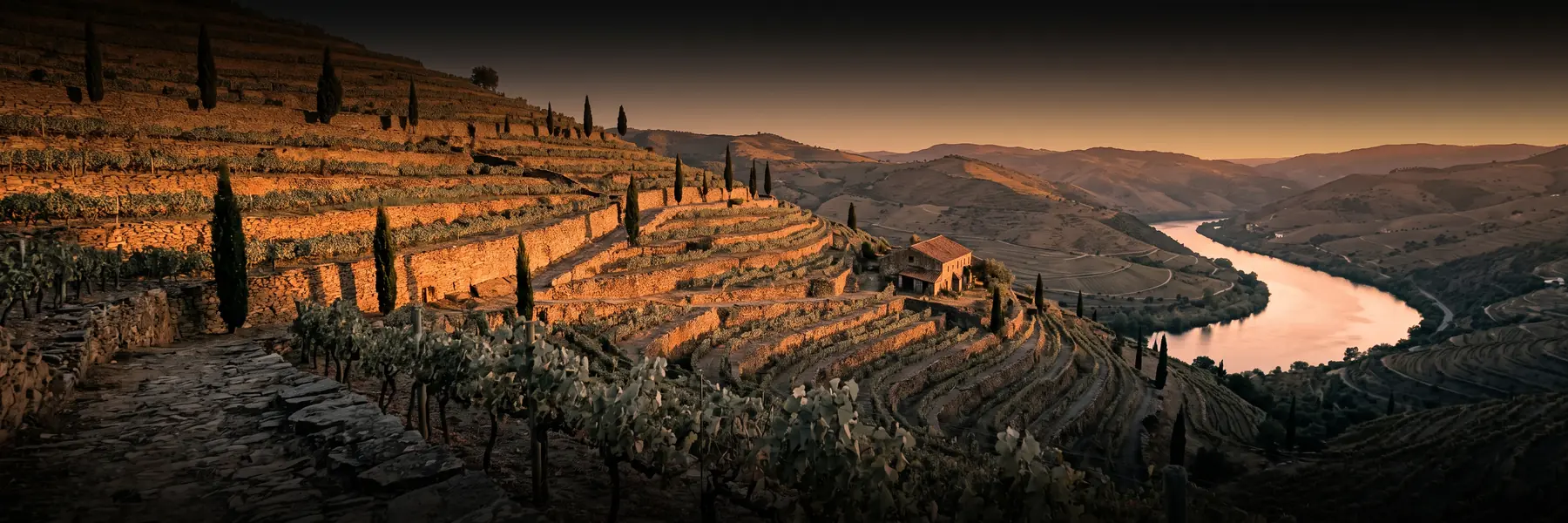
Alentejo — Portugal's Sun-Drenched Wine Plains
Alentejo — Portugal's Sun-Drenched Wine Plains
Alentejo is Portugal's largest region geographically (the Douro has more land under vine), stretching across the country's warm, flat interior south of Lisbon. Famous for cork (it produces roughly half the world's supply), olive oil, and wheat, it is also home to some of Portugal's most approachable and rapidly improving wines. The region's rich red blends and aromatic whites are among Portugal's best value offerings.
Geography
Alentejo occupies most of the interior south of the Tagus River. The landscape is strikingly open — rolling plains of cork oak, olive trees, wheat, and eucalyptus, punctuated by granite outcroppings and ancient hilltop towns. The wine region is divided into eight sub-regions (sub-regiões), the most important:
- Évora — centred on the historic walled city; diverse soils; benchmark quality
- Reguengos — warm, granite-clay soils; Esporão is here; reliable, good-value wines
- Portalegre — northernmost sub-region; highest altitude (up to 800m); most continental climate; produces the most elegant, structured Alentejo wines
- Vidigueira — southern; famous for whites from Antão Vaz
- Borba — marble-limestone soils; reliable producers
Climate
Hot Continental Mediterranean. Summer daytime temperatures frequently exceed 35°C (the August average high is around 33–34°C). Rainfall is low (400–600mm per year). Irrigation is permitted and widely used. Cork oak coverage helps moderate extreme temperatures. Alentejo is one of Europe's warmest wine regions; the main winemaking challenge is managing over-ripeness and retaining freshness.
Key Grapes
Red
| Grape | Character |
|---|---|
| Aragonez (Tempranillo) | Structure, dark cherry, tobacco; most planted red |
| Trincadeira | Aromatic, spicy, high acid; excellent when well managed |
| Alicante Bouschet | Dark, robust; one of the few grapes with red flesh; tannic, plummy |
| Touriga Nacional | Premium blending; floral, structured |
| Castelão | Fresh, cherry, good acidity |
| Syrah | Increasing presence; adds dark fruit and structure |
White
| Grape | Character |
|---|---|
| Antão Vaz | The finest Alentejo white; rich, golden, peachy, full-bodied; surprisingly age-worthy |
| Roupeiro (Síria) | Crisp, floral; widely planted |
| Arinto | High-acid; fresh, citrus; keeps wine lively in the heat |
| Verdelho | Aromatic, round |
Wine Styles
Alentejo Red Blend: Rich, generous, full-bodied. Dark cherry, plum, dried herbs, chocolate. Medium tannins. Often fermented in lagares (traditional granite troughs) for premium wines. Very approachable, food-friendly. One of the world's best mid-market reds.
Premium Alentejo Red: Single-quinta or old-vine expressions from Portalegre or specific sub-regions. More structured, complex; can age 10–20 years. Touriga Nacional adds floral complexity; Alicante Bouschet adds depth.
Alentejo White: Antão Vaz produces rich, textured whites with a warm-climate opulence that works surprisingly well with complex dishes. Arinto in the blend adds essential freshness.
Rosado: Light, fresh, versatile. Summer wines.
Cork Production
Alentejo's cork forests are among the most important ecological habitats in Europe. Cork oak (Quercus suber) bark is harvested every 9 years without harming the tree. The bark regenerates; harvesting actually stimulates the tree and the forests are among Europe's most biodiverse ecosystems.
The cork industry employs tens of thousands in the region and cork closures remain the choice for serious wine. The irony of Alentejo wine: the world's finest cork is produced here, yet modern-style Alentejo wines are frequently sealed with Diam or Stelvin for commercial reasons.
Famous Producers
- Esporão — the region's benchmark large estate; consistent, excellent quality across all price levels; Esporão Reserva is one of Portugal's best-selling premium wines
- Herdade do Mouchão — traditional; produces remarkable, age-worthy wines from Alicante Bouschet
- Herdade das Servas — innovative; single-variety and field blend expressions
- Cortes de Cima — Danish-owned; very high quality; Syrah and Portuguese variety blends
- Fitapreta (António Maçanita) — modern reference for fresher, lower-intervention Alentejo
Making Alentejo-Style Wine
The challenge in Alentejo winemaking is managing the heat — preserving freshness and avoiding over-extraction of harsh phenolics from over-ripe fruit.
Harvest Timing
- Harvest early (before full sugar ripeness) to retain acidity. Many Alentejo producers harvest at 23–24°Bx.
- Night harvesting is standard for temperature control.
- pH management is critical: 3.5–3.7 is the target; higher pH means instability.
Fermentation
- Cool fermentation rooms or refrigerated tanks essential.
- Ferment reds at 24–28°C — avoid pushing higher in an already warm climate.
- 10–14 day maceration for standard style; shorter for fresh, fruity commercial wines.
Yeast
- BDX (Bordeaux) — dark fruit, smooth structure
- R2 — reliable, fruit-forward
- Spontaneous fermentation is used by the top estates
Oak
- French oak is standard at the premium level; 30–50% new for Reserva.
- Stainless steel ageing is common for entry-level wines.
- Clay amphorae (talhas) — ancient Alentejo tradition — experiencing a revival for natural wines.
White Wine
- Antão Vaz requires very cool fermentation (13–15°C) to preserve its characteristic peach and apricot aromatics.
- Blend with Arinto for freshness; Roupeiro for floral lift.
- Avoid overuse of oak — the fruit richness is the attraction.
Talha Wines
Alentejo has an ancient winemaking tradition using clay amphorae (talhas). Grapes are fermented with skins in large clay vessels (200–600L), sealed with olive oil, and left until São Martinho (November 11) when the wine is traditionally first tasted and sold. The resulting wines are orange/amber in colour (from skin contact), textured, and unique. This tradition is experiencing a significant revival and Alentejo talha wines are among Portugal's most distinctive.
Food Pairing
Alentejo red: black pork (porco preto) dishes, lamb stew (ensopado de borrego), açorda (bread soup), roasted meats, mild goat and sheep cheeses.
Alentejo white: grilled fish, seafood cataplana, cream-sauced dishes.
Talha wines: charcuterie, aged cheeses, rich meat dishes.
Tip: In a hot climate like Alentejo, acid management is the most critical winemaking decision. If tartaric acid is needed, add it before fermentation begins — acids integrate far better during fermentation than added post-fermentation.